One-stop sourcing
Skincare Packaging from a Single Supplier
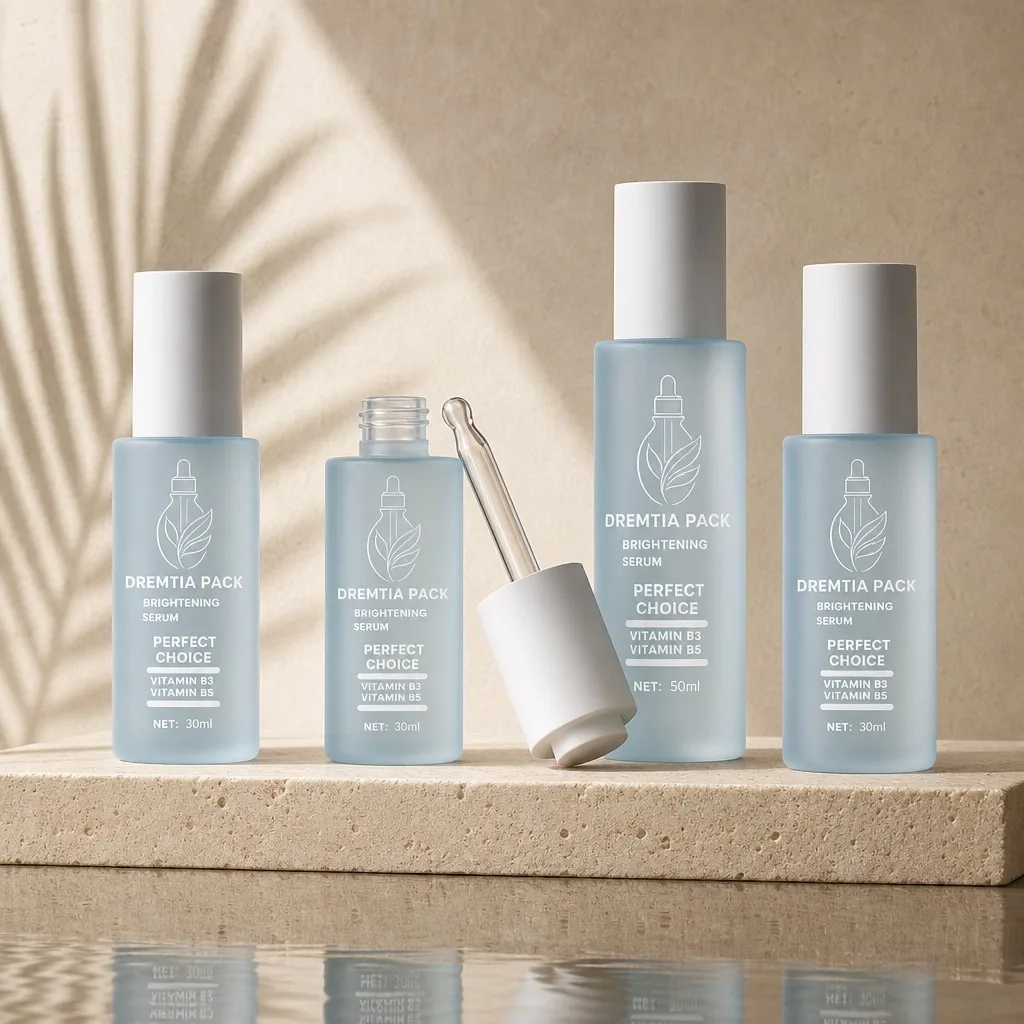
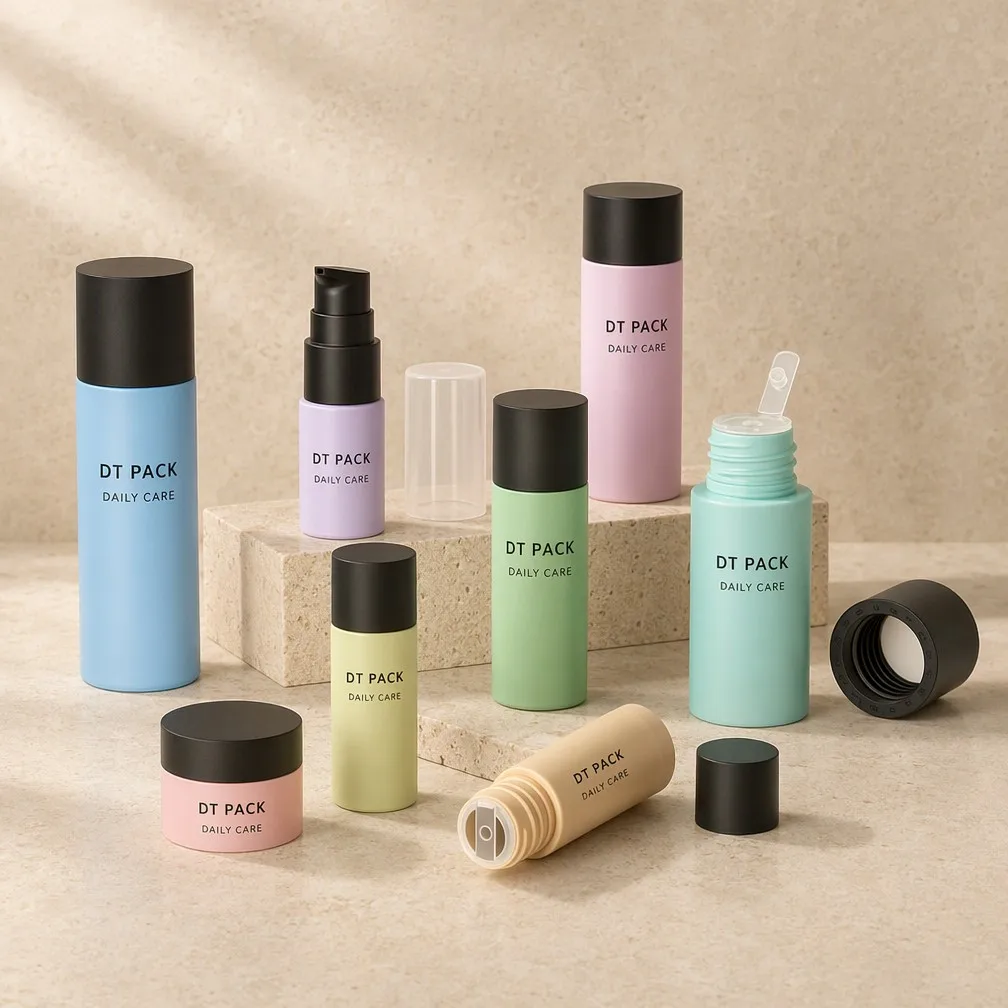
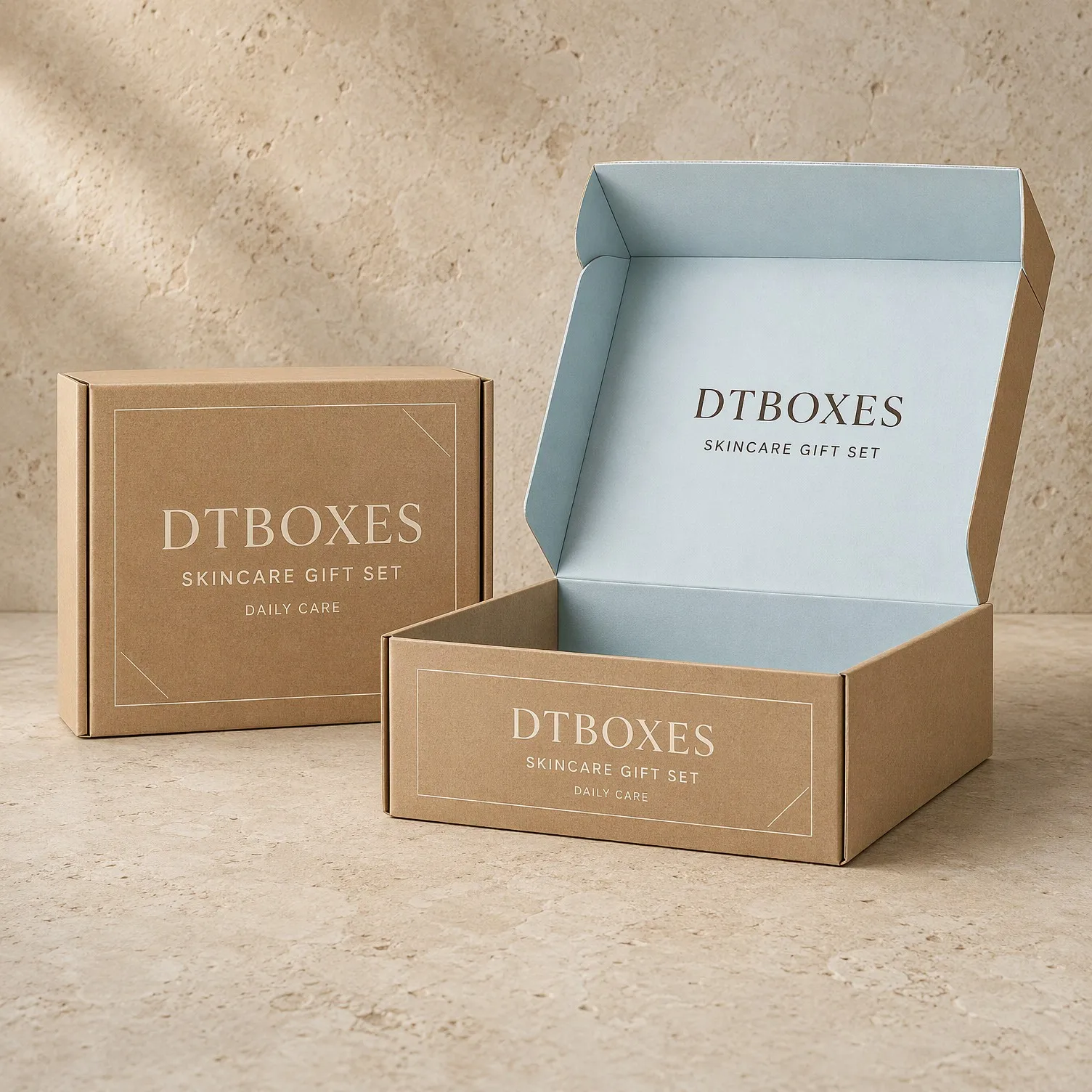
Skincare packaging spans three material families that are usually bought from three different supply chains. We consolidate them: primary container, dispensing component, decoration and secondary carton, specified against each other and produced under one quality standard.
That matters most where components meet — a pump that does not suit the emulsion, a carton dimensioned from a drawing instead of the real bottle, a cap colour approved on a different substrate. Those are the failures that delay launches, and they happen in the gaps between suppliers.

Material families
What we supply
Each family has its own page with categories, specifications and honest trade-offs.
Direct answers
Skincare packaging questions, answered plainly
Concise answers first, with the reasoning underneath.
What is the MOQ for custom skincare packaging?
There is no single MOQ across all packaging. Containers and decoration follow their own set-up economics, and custom paper boxes have a standard minimum order of 5,000 pieces per design. Selected paper box projects may start from a few hundred pieces, subject to evaluation of the structure, material, printing method and finishing.
A quoted MOQ is the highest of four separate minimums: the container production run, the decoration set-up, the component supplier's minimum and the resin or board batch size. Identifying which one dominates your quotation tells you exactly what to change in the specification to bring it down. For paper boxes the standard quantity is 5,000 pieces per design, and lower quantities are confirmed project by project rather than offered as a standing range.
How much does custom skincare packaging cost?
Unit cost is driven by fixed set-up (tooling, plates, screens, colour changeover) spread across your order quantity, plus variable material, component and decoration costs.
At launch volumes the fixed costs dominate, which is why the same specification can quote very differently at 3,000 and 50,000 units. Brands with small first orders usually get the best result by choosing low-set-up decoration — digital carton printing, UV printing, labels — and deferring custom moulds and masterbatch colour to a later run.
What is the difference between glass and plastic skincare packaging?
Glass is inert, impermeable to oxygen and heavier; plastic is lighter, shatter-resistant and enables airless and squeeze dispensing. Glass suits prestige and retail; plastic suits parcel shipping and active protection through airless systems.
A 30ml glass dropper bottle weighs roughly 60–110g against 12–20g for a PET equivalent, which affects freight on every shipment. Glass offers a better oxygen barrier, but an airless plastic bottle protects a sensitive formula better than a glass dropper bottle, because a dropper introduces air on every use.
What type of packaging is best for serum?
For stable serums, a 30ml amber or frosted glass dropper bottle. For oxidation-sensitive actives such as retinol or vitamin C, an airless bottle in an opaque finish.
The decision hinges on air exposure. Droppers draw fresh air into the headspace at every use; airless piston and pouch systems do not. Light protection comes from amber glass, opaque coating or a secondary carton, and dose consistency depends on pipette length and bulb material.
How long does custom packaging take?
A decorated stock pack usually takes 10–16 weeks from brief to delivered goods. A pack requiring a custom mould realistically needs 5–7 months.
Typical stages: quotation 3–7 days, samples 7–14 days, artwork and proofing 1–2 weeks, production 25–40 days, sea freight 25–45 days. Tooling adds 25–50 days plus trial sampling. Most delays occur in artwork preparation and approval rather than manufacturing.
Can you provide custom moulds?
Yes — private moulds for glass bottles and jars, and injection or blow tooling for plastic containers and closures, with ownership terms agreed before tooling begins.
The programme runs from feasibility review through 3D modelling, tooling, trial samples and a first-article dimensional report before production cavities are cut. Custom moulds require a committed production volume; the figure depends on cavity count and complexity and is stated in the tooling quotation.
Can you provide packaging samples?
Yes. Standard catalogue samples, decoration samples, customised samples and pre-production samples are all available, with cost and lead time depending on the type.
Standard catalogue samples ship in a few days. Decoration samples showing a specific coating, print or foil take 1–2 weeks. Paper box samples are completed within 10 working days after the final artwork files are confirmed, with shipping time additional. Pre-production samples made on production tooling are scheduled with the production plan and are the only samples that should be used for final approval before a production run.
Can you supply glass, plastic and paper packaging together?
Yes. A complete pack — glass or plastic container, closure or dispenser, decoration and printed carton — can be specified, produced and shipped as one consolidated order.
This is the core of how we work. Cartons are dimensioned from the actual container being supplied, fit is verified on physical mock-ups, and everything ships together on one document set, which removes the coordination gap that appears when three suppliers each deliver separately.
By application
Popular categories
Skincare packaging FAQ
It depends on the specification. Stock containers with labelling start low; custom colour, decoration and moulds raise the minimum. For custom paper boxes the standard minimum order quantity is 5,000 pieces per design, and selected paper box projects may start from a few hundred pieces subject to evaluation of the structure, material, printing method and finishing. Send the item and target quantity and we will quote the real minimum for that exact configuration rather than a generic figure.
Yes — standard samples, decoration samples and pre-production samples. Standard samples are usually available quickly; customised samples are quoted with the project because they require set-up.
Yes, through masterbatch resin colour, spray coating on glass or plastic, or printed colour on cartons. Coating gives full Pantone freedom at a lower minimum; masterbatch is more durable but needs a larger volume.
Yes — silk screen printing, UV printing, hot stamping, embossing and labelling. We will advise which method suits your artwork, substrate and quantity, including minimum legible sizes.
Yes, for glass and plastic. The programme covers feasibility review, tooling, trial samples and a dimensional report. Ownership and storage terms are agreed in writing before tooling starts.
Yes — pumps, droppers, sprayers, caps, collars, liners, spatulas and applicators, specified and compatibility-tested with the container rather than sold as separate items.
Yes. Mixed orders across glass, plastic and paper are normal for us and are consolidated into one shipment with one document set.
Yes. We ship worldwide by sea, air and courier, on EXW, FOB, CIF or DDP terms where available. Export documentation is prepared with the shipment.
Next step
Tell us what you are packing. We will send a specification and a price.
Share the product type, capacity, quantity and any decoration you have in mind. Qualified RFQs are answered within one business day.