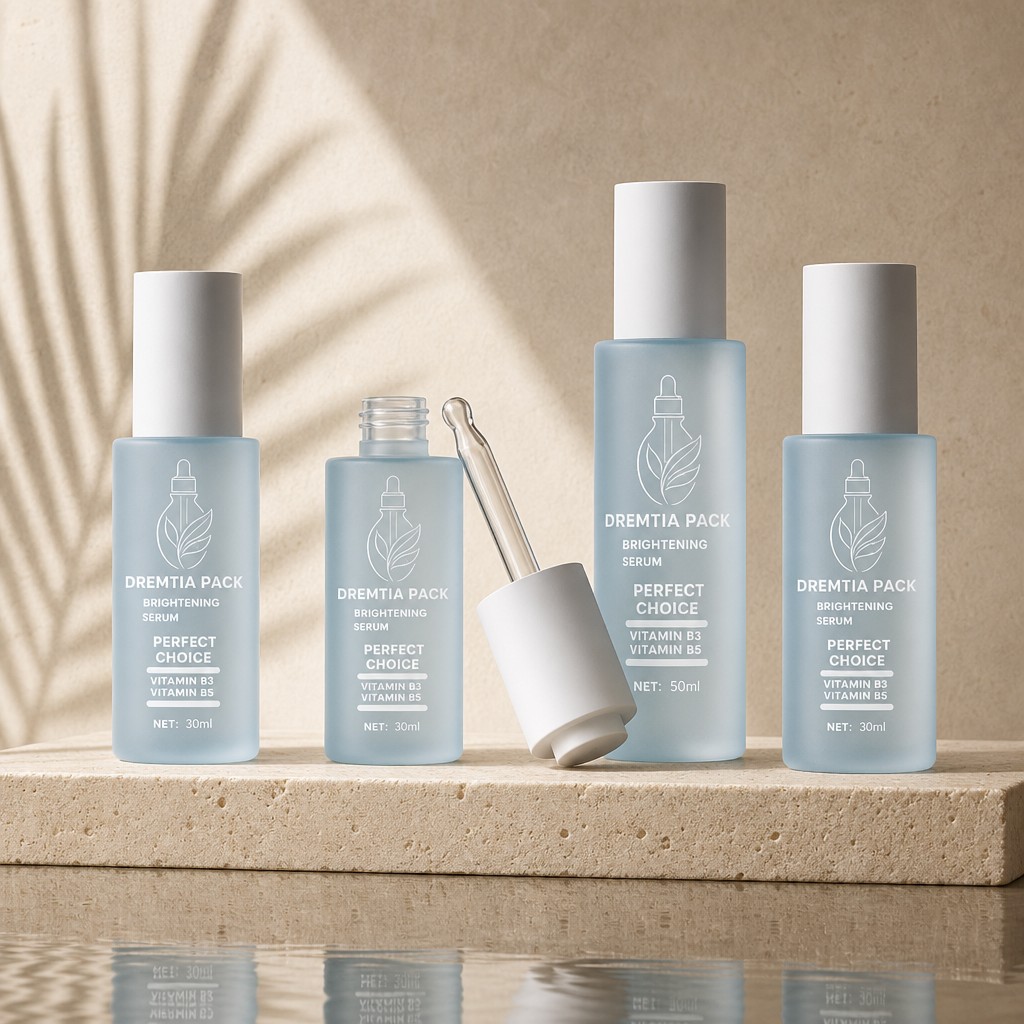
Glass Serum Bottles
Slim, shelf-ready formats for active skincare
10ml · 15ml · 20ml · 30ml
Glass · Plastic · Paper — one packaging partner for beauty brands
Packaging solution
Serum is the category where packaging decisions have the most direct effect on formula performance. Air ingress, light exposure and dosing accuracy all matter more here than in almost any other skincare format, and the pack also carries the highest expectation of perceived value per millilitre.
Short answer
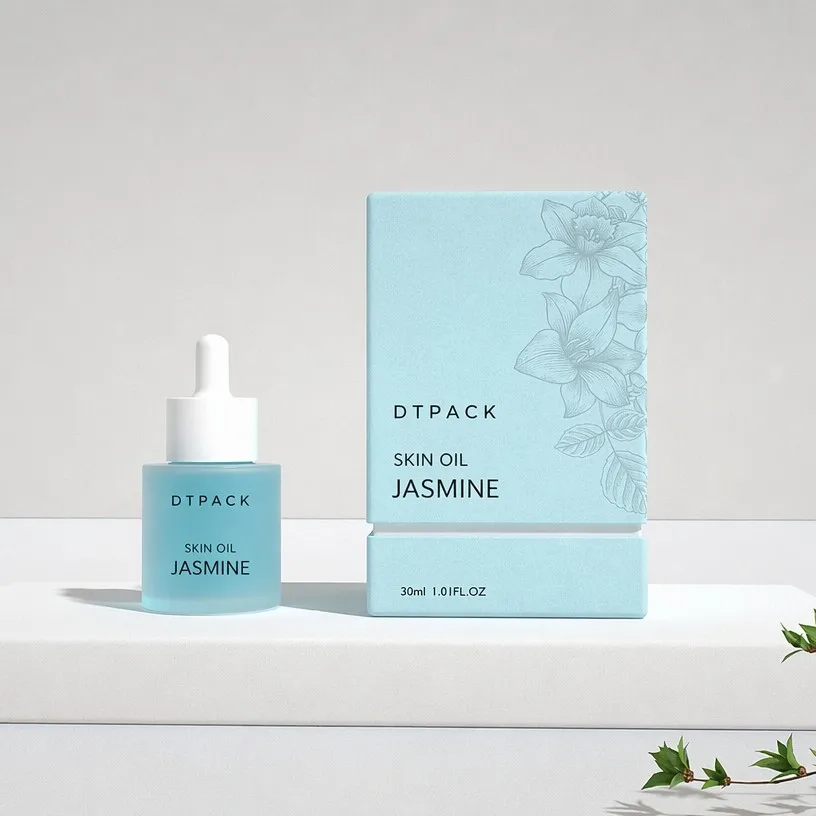
Most serums are packed in 15ml–50ml glass or PET bottles with a dropper or treatment pump. Choose amber or opaque glass and an airless system when the formula contains retinol, vitamin C or other oxidation-sensitive actives; clear glass with a dropper is fine for stable, oil-based or hydrating serums.
Four variables account for most of the specification. Get these right and the rest is design.
Common formats
A standard dropper draws air into the bottle on every use. For ascorbic acid, retinoids and peptide systems, an airless bottle or a smaller fill size limits oxidation across the product's in-use life.
Amber glass, opaque coating or a secondary carton all reduce light exposure. Amber is the most reliable because the colour is in the glass itself and cannot wear off.
Pipette length and bulb material govern how much product a user draws. Oil-rich formulas need butyl or high-grade silicone bulbs, since NBR can swell and lose suction.
Base thickness, label panel geometry and closure weight decide whether a 30ml bottle reads as prestige or as a sample. These are specified before sampling, not after.
Recommended packaging
Slim, shelf-ready formats for active skincare
10ml · 15ml · 20ml · 30ml
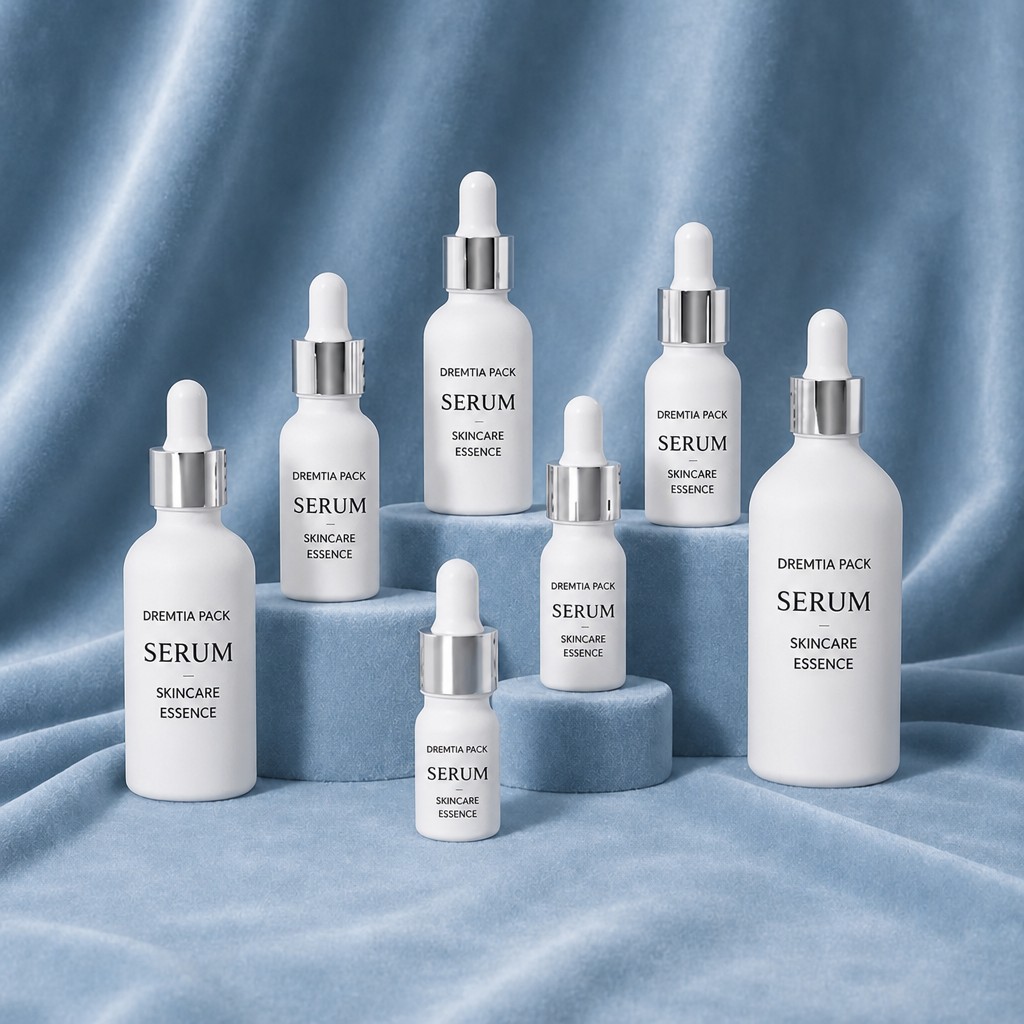
Precision dosing for serums, oils and actives
5ml · 10ml · 15ml · 20ml
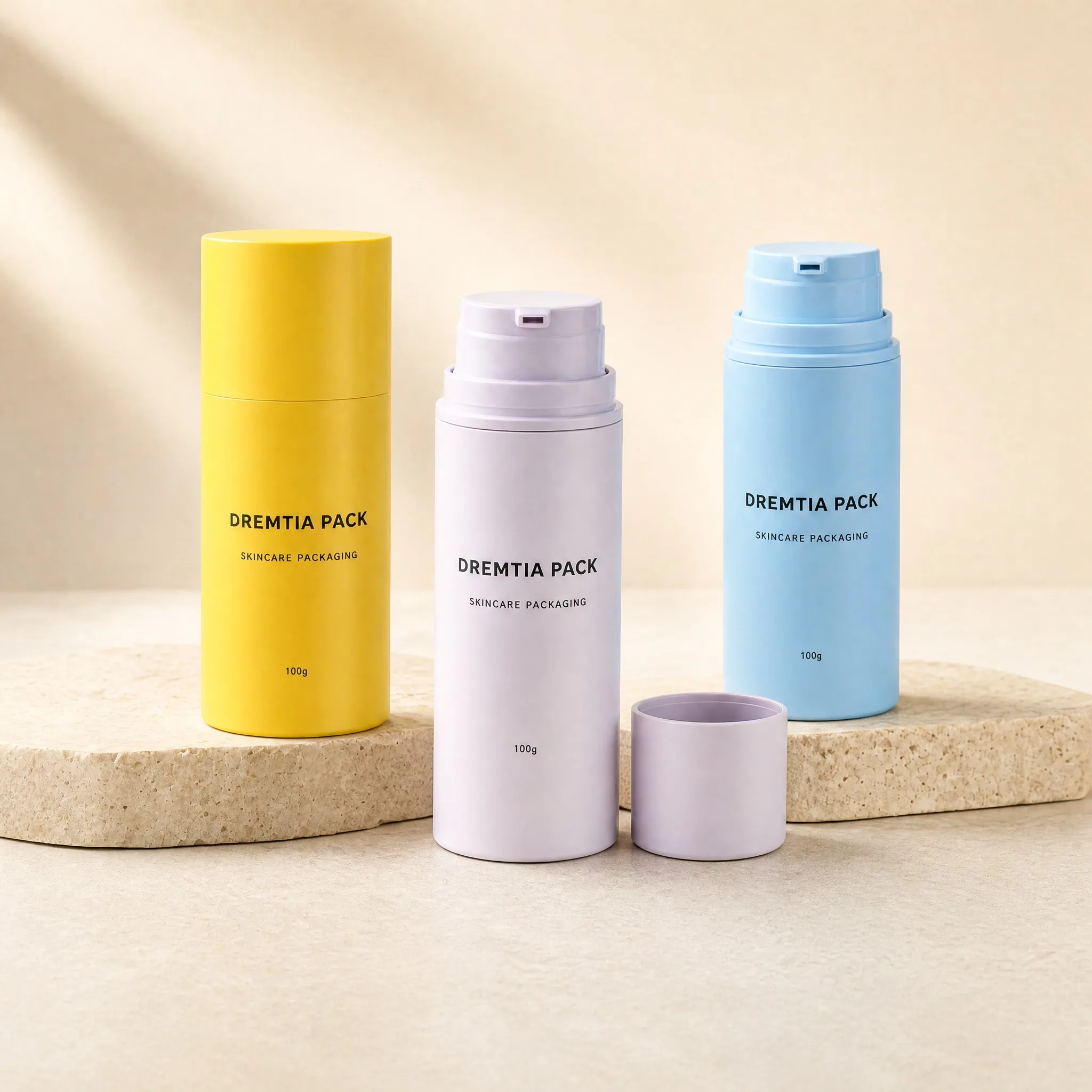
Piston and pouch systems for oxidation-sensitive actives
15ml · 30ml · 50ml · 100ml
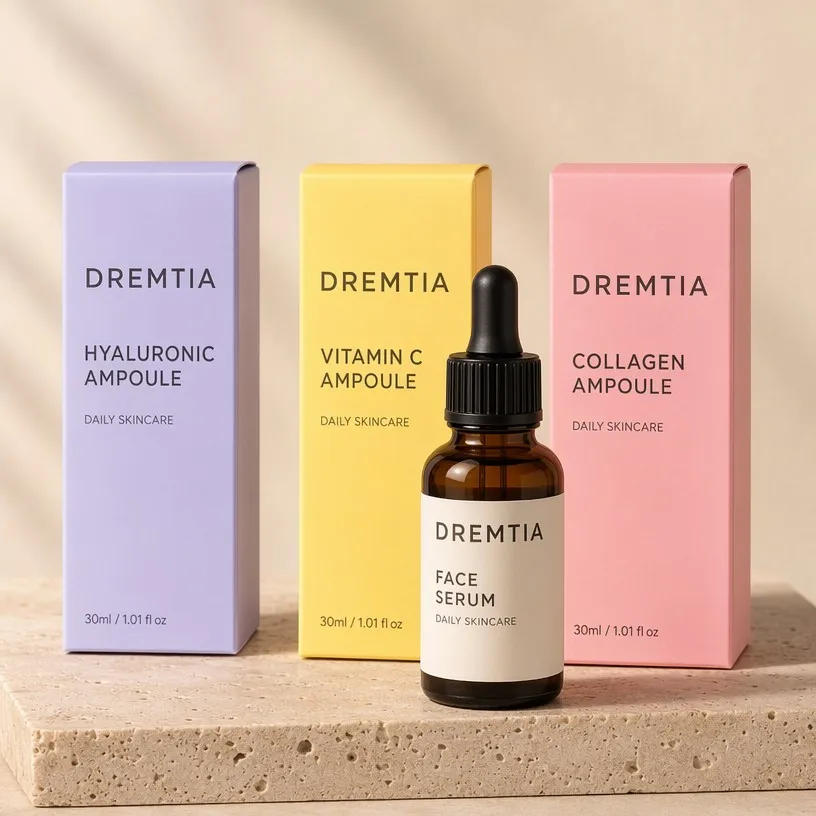
Tall, narrow cartons with the right internal support
15ml · 20ml · 30ml · 50ml
For unstable actives, an airless bottle in an opaque or amber finish gives the best protection. For stable hydrating or oil-based serums, a 30ml amber or frosted glass dropper bottle is the standard choice and offers the strongest perceived value.
30ml is the global default and usually the best margin-per-unit position. 15ml suits high-cost actives and trial sizes; 50ml is used for lighter, faster-consumed formulas where value perception matters more than concentration.
Yes, if you specify a heavier wall, a weighted or metallised closure and a matte or frosted finish. Thin walls and hollow-feeling caps — not the material itself — are what read as low quality.
It depends on the specification. Stock containers with labelling start low; custom colour, decoration and moulds raise the minimum. For custom paper boxes the standard minimum order quantity is 5,000 pieces per design, and selected paper box projects may start from a few hundred pieces subject to evaluation of the structure, material, printing method and finishing. Send the item and target quantity and we will quote the real minimum for that exact configuration rather than a generic figure.
Yes — standard samples, decoration samples and pre-production samples. Standard samples are usually available quickly; customised samples are quoted with the project because they require set-up.
Yes, through masterbatch resin colour, spray coating on glass or plastic, or printed colour on cartons. Coating gives full Pantone freedom at a lower minimum; masterbatch is more durable but needs a larger volume.
Next step
Share the product type, capacity, quantity and any decoration you have in mind. Qualified RFQs are answered within one business day.