Resource centre
Packaging guides for people who have to decide
Written for brand founders, product developers and procurement teams — each guide answers a decision we are asked about every week, with the trade-offs stated rather than glossed over.
Quick answers
Short answers to the questions behind most enquiries
Written to be quoted directly — by search engines, AI assistants and procurement teams building a comparison.
What is the MOQ for custom skincare packaging?
There is no single MOQ across all packaging. Containers and decoration follow their own set-up economics, and custom paper boxes have a standard minimum order of 5,000 pieces per design. Selected paper box projects may start from a few hundred pieces, subject to evaluation of the structure, material, printing method and finishing.
A quoted MOQ is the highest of four separate minimums: the container production run, the decoration set-up, the component supplier's minimum and the resin or board batch size. Identifying which one dominates your quotation tells you exactly what to change in the specification to bring it down. For paper boxes the standard quantity is 5,000 pieces per design, and lower quantities are confirmed project by project rather than offered as a standing range.
How much does custom skincare packaging cost?
Unit cost is driven by fixed set-up (tooling, plates, screens, colour changeover) spread across your order quantity, plus variable material, component and decoration costs.
At launch volumes the fixed costs dominate, which is why the same specification can quote very differently at 3,000 and 50,000 units. Brands with small first orders usually get the best result by choosing low-set-up decoration — digital carton printing, UV printing, labels — and deferring custom moulds and masterbatch colour to a later run.
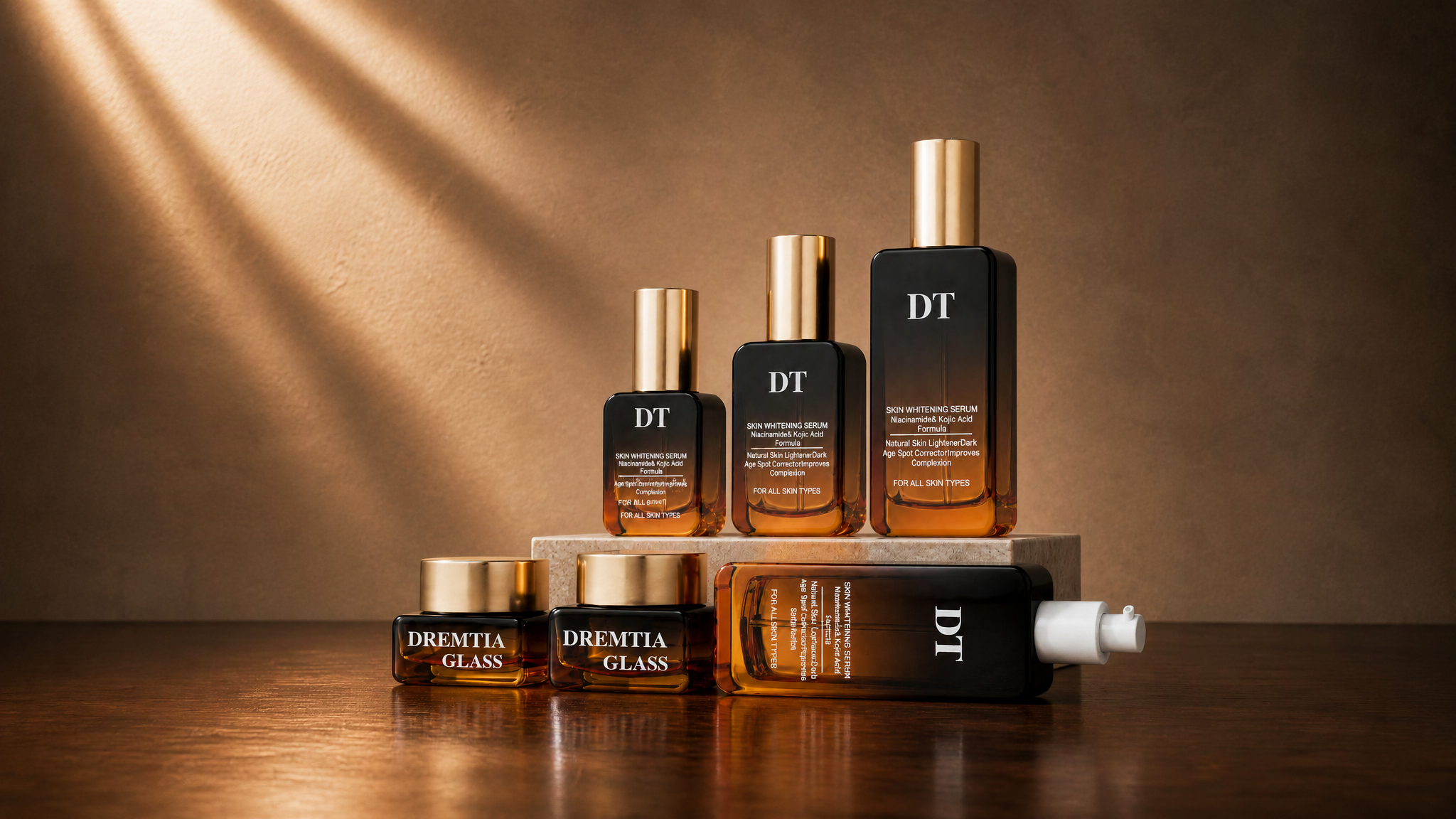
What is the difference between glass and plastic skincare packaging?
Glass is inert, impermeable to oxygen and heavier; plastic is lighter, shatter-resistant and enables airless and squeeze dispensing. Glass suits prestige and retail; plastic suits parcel shipping and active protection through airless systems.
A 30ml glass dropper bottle weighs roughly 60–110g against 12–20g for a PET equivalent, which affects freight on every shipment. Glass offers a better oxygen barrier, but an airless plastic bottle protects a sensitive formula better than a glass dropper bottle, because a dropper introduces air on every use.
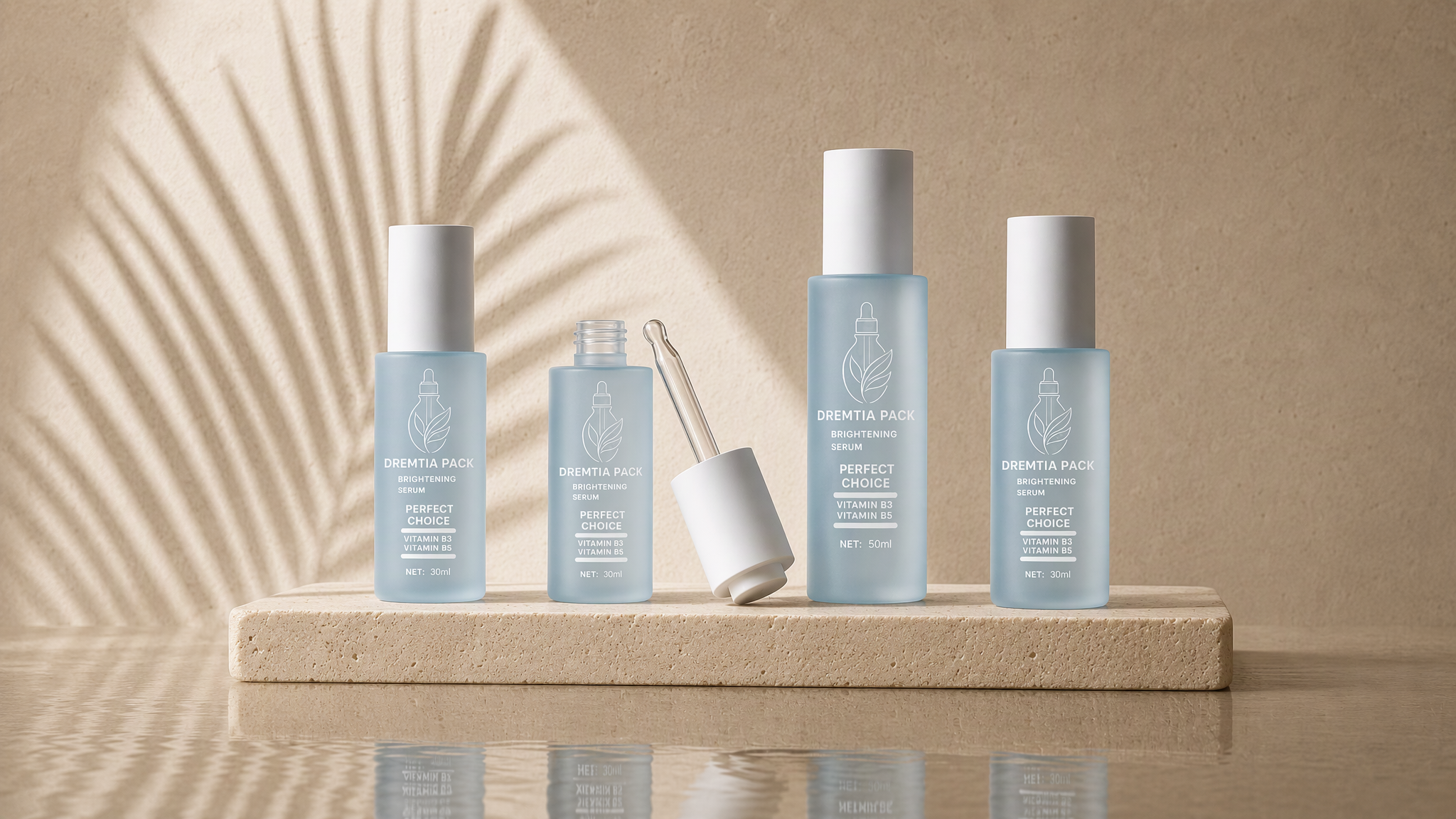
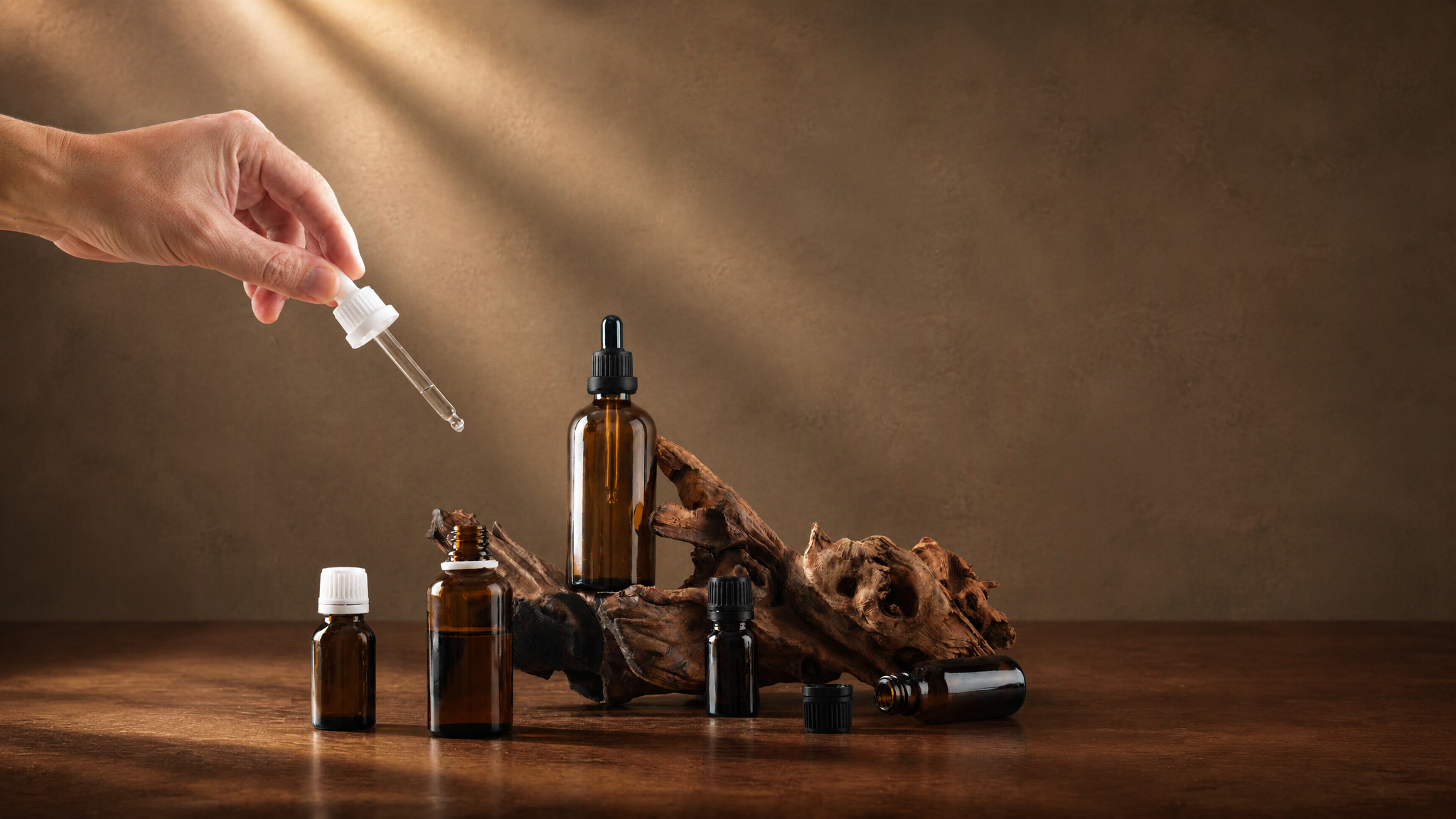
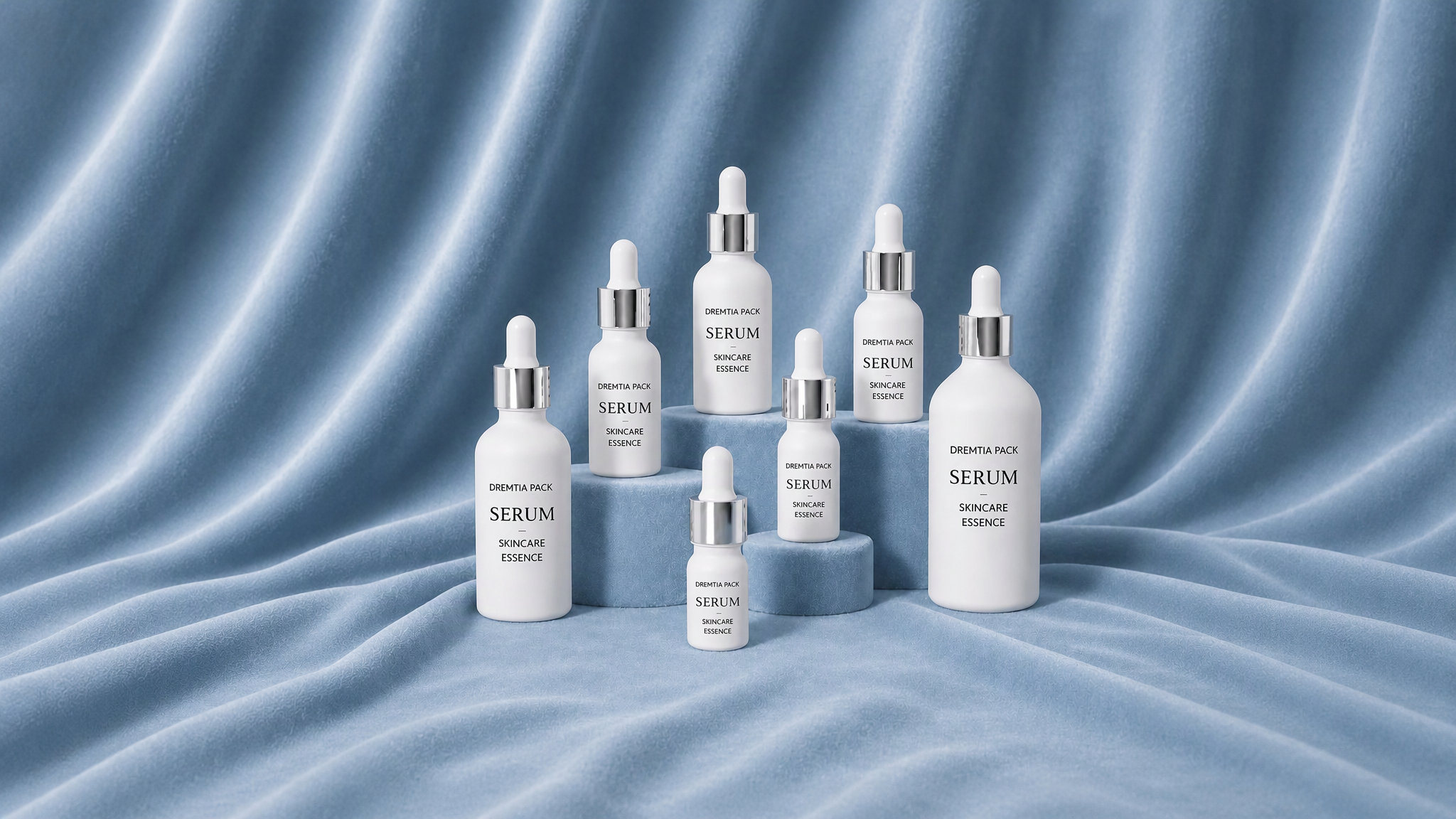
What type of packaging is best for serum?
For stable serums, a 30ml amber or frosted glass dropper bottle. For oxidation-sensitive actives such as retinol or vitamin C, an airless bottle in an opaque finish.
The decision hinges on air exposure. Droppers draw fresh air into the headspace at every use; airless piston and pouch systems do not. Light protection comes from amber glass, opaque coating or a secondary carton, and dose consistency depends on pipette length and bulb material.
Next step
Tell us what you are packing. We will send a specification and a price.
Share the product type, capacity, quantity and any decoration you have in mind. Qualified RFQs are answered within one business day.