Surface & Colour
Spray Coating
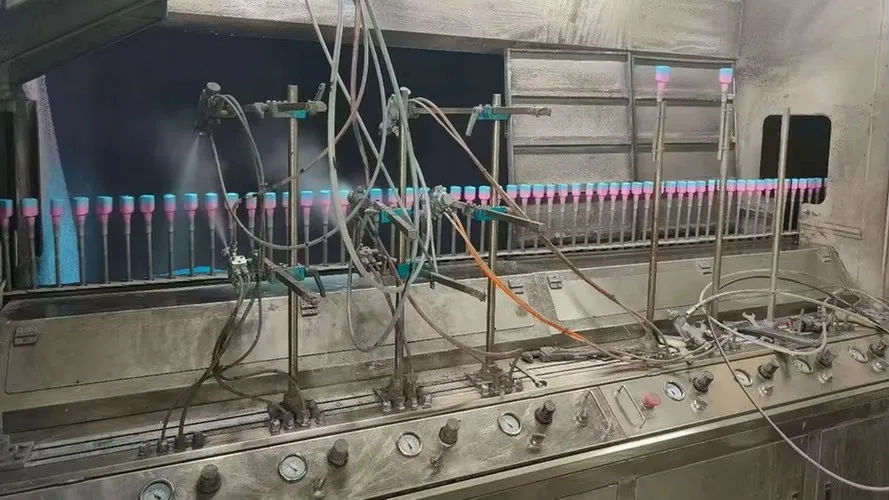
A pigmented or clear coating applied to the container's exterior, cured and then tested for adhesion and abrasion. Coating gives colour freedom that furnace-coloured glass and masterbatch resin cannot match at low volumes.
Why brands use it
- Any Pantone at a workable minimum quantity
- Gradient, ombré and two-tone effects
- Soft-touch and matte tactile finishes
Process
- 01Surface preparationCleaning and, where needed, primer for adhesion.
- 02Colour set-upCoating mixed to the approved chip; spray parameters set.
- 03Application and curingAutomated spray booth followed by oven curing.
- 04TestingCross-hatch adhesion, abrasion and alcohol rub tests on production samples.
Available materials
Typical applications
- Colour-matched serum bottles
- Gradient fragrance flacons
- Soft-touch jars
- Metallic effect caps
MOQ considerations
Coating set-up and colour changeover drive the minimum. It is significantly lower than furnace-coloured glass, which is why coating is the standard route to a custom colour.
Lead time
Samples 10–14 days; adds 7–12 days to base component production.
Other services
Often specified together
Spray Coating FAQ
A correctly cured coating with a primer passes cross-hatch and abrasion testing and holds up in normal use. Failures usually come from skipped surface preparation or under-curing, which is why we test every production batch rather than only the sample.
Coating complicates it. Glass recyclers generally tolerate thin organic coatings, but heavy coatings on plastic can affect sorting. If recyclability is a stated claim, we will tell you where a coating undermines it.
Yes — standard samples, decoration samples and pre-production samples. Standard samples are usually available quickly; customised samples are quoted with the project because they require set-up.
Yes, through masterbatch resin colour, spray coating on glass or plastic, or printed colour on cartons. Coating gives full Pantone freedom at a lower minimum; masterbatch is more durable but needs a larger volume.
Yes — silk screen printing, UV printing, hot stamping, embossing and labelling. We will advise which method suits your artwork, substrate and quantity, including minimum legible sizes.
Next step
Tell us what you are packing. We will send a specification and a price.
Share the product type, capacity, quantity and any decoration you have in mind. Qualified RFQs are answered within one business day.